
The Death of the Browser Tab: Open Claw, WebMCP, and the New Agentic Stack

If you have been on Twitter or "Moltbook" in the last two weeks, you’ve seen it. You’ve seen the screenshots of terminal windows running wild, the stories of people negotiating car leases while they sleep, and the viral "lobsters" (agents) talking to each other.
We are living through the "Open Claw Moment."
For the last three years, we’ve been talking to AI. We treated LLMs like very smart encyclopedias or creative writing interns. But with the rise of Open Claw (formerly Clawdbot), the mass adoption of the Model Context Protocol (MCP), and the emerging WebMCP standard, we are crossing a threshold. We are moving from the era of Chat to the era of Agency.
The AI is no longer just in the browser. It is the browser. And it has root access.
Here is why the combination of these three technologies is about to fundamentally rewrite how you use a computer—and why the "website" as you know it is about to change forever.
1. The Body: Open Claw (The Agent that "Does")
Let’s address the elephant (or lobster) in the room. Open Claw—the open-source agent formerly known as Clawdbot—went viral for a reason. It fulfilled the promise that Siri and Alexa made a decade ago but never kept.
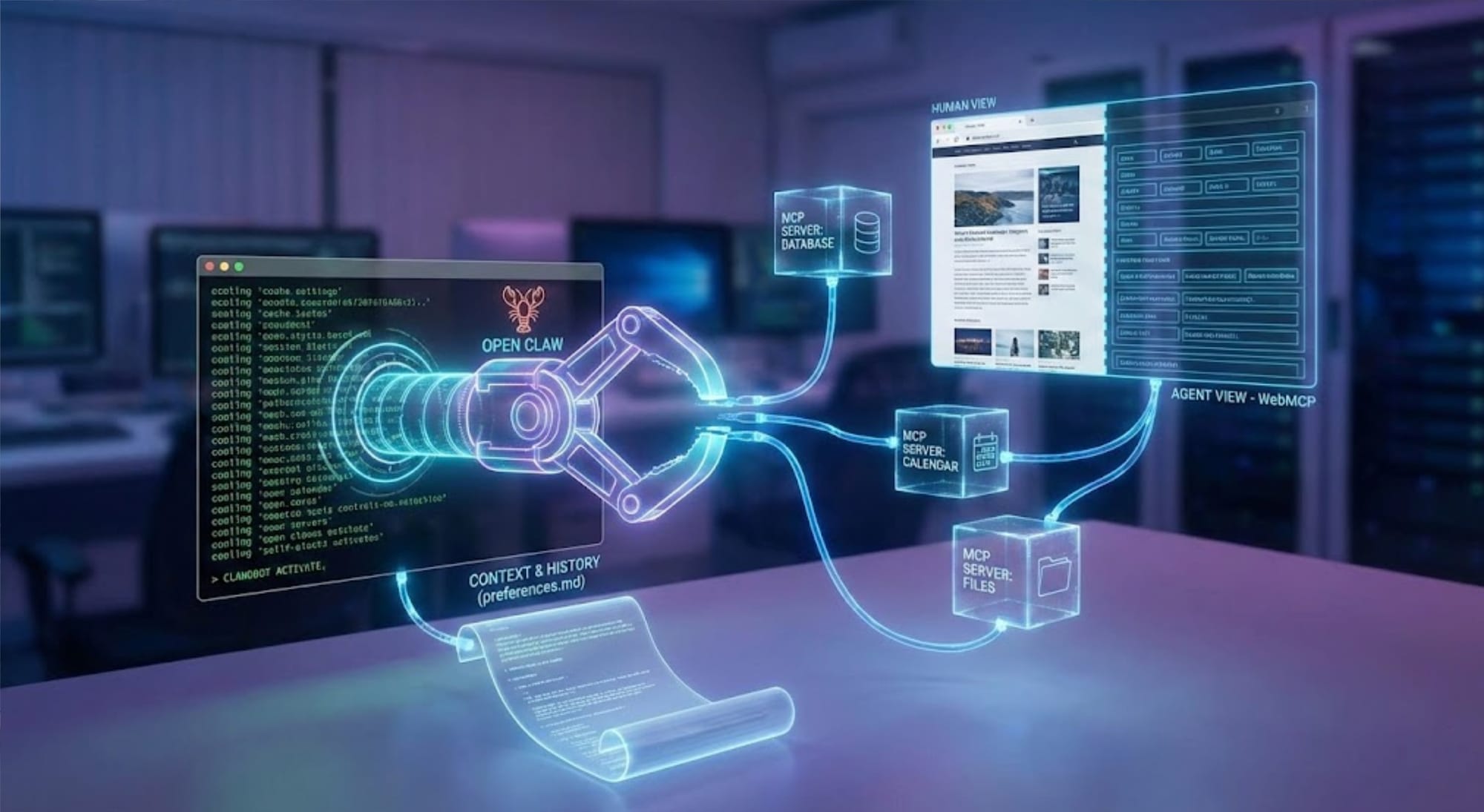
Unlike ChatGPT or Claude, which live in a sanitized sandbox on a remote server, Open Claw runs locally on your machine. It lives in your terminal. It has access to your file system, your SSH keys, your local server, and your messaging apps (WhatsApp, Signal, Telegram).
It doesn’t just output text; it executes code.
- Old AI: "Here is a Python script to sort your files."
- Open Claw: "I noticed your Downloads folder was messy, so I wrote a script to sort it, ran it, and archived the old PDFs. I also found an unpaid invoice in there and drafted an email to the client."
This is the power of a Local Agent Runtime. It has "hands." It has persistent memory (via simple Markdown files it reads and writes to). It creates a feedback loop where the AI isn't just an advisor, but an employee operating your machine.
2. The Nervous System: MCP (The Universal Connector)
If Open Claw is the body, MCP (Model Context Protocol) is the nervous system.
Before MCP, connecting an AI to a new tool was a nightmare of custom API integrations. If you wanted your agent to read your calendar, you wrote a custom connector. If you wanted it to access a Postgres database, you wrote another.
MCP changed the game by standardizing how AI models talk to data. It is the "USB-C of AI."
Now, you don't build a "Claude integration" or an "OpenAI integration." You build an MCP Server for your data source. Once that exists, any MCP-compliant client—whether it’s Claude Desktop, Open Claw, or a custom enterprise bot—can instantly "plug in" and understand how to use that data.
This is why Open Claw feels so powerful right now. It didn't need to invent 500 integrations. It just needed to speak MCP. Suddenly, your local agent can query your company's SQL database, check your Linear tickets, and update your Notion docs, all because those tools now speak the same language.
3. The Map: WebMCP (The End of Screen Scraping)
This is the newest and perhaps most transformative piece of the puzzle.
Until now, if an agent wanted to buy you a plane ticket, it had to act like a human: it would load the webpage, look at the pixels, try to find the "Buy" button, and click it. This is slow, expensive (loading all that HTML/CSS), and brittle (if the airline changes the button color, the agent fails).
Enter WebMCP.
Currently in preview (check your Chrome flags!), WebMCP allows websites to expose a "hidden API" specifically for agents. Instead of forcing the agent to read the visual UI, the website provides a structured tool definition.
- Human view: A beautiful webpage with images of beaches and a complex date picker.
Agent view (WebMCP):JSON
{
  "tool": "book_flight",
  "schema": { "destination": "string", "date": "ISO8601", "class": "economy|business" }
}
The agent doesn't "browse." It simply calls the book_flight function defined by the website. It is reliable, instant, and uses a fraction of the tokens.
The Insight: In the near future, websites will have two faces. The "Front End" for the few humans who still enjoy clicking things, and the "Agent End" (WebMCP) for the bots that do the actual work.
The Convergence: A Day in 2027
So, how does this change your life? It moves you from an Operator to a Manager.
Imagine you want to plan a dinner party.
Today (2026): You open 5 tabs. You search for recipes. You copy ingredients to a shopping list app. You open a grocery delivery site. You search for each item. You checkout. You open Spotify to make a playlist.
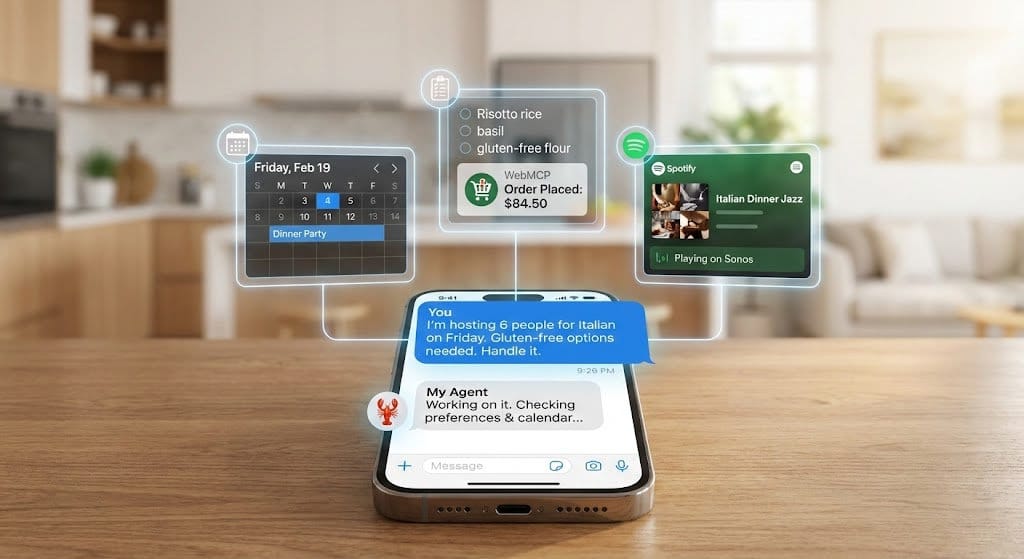
The Open Claw + WebMCP Future: You send a message to your agent on Signal: "I'm hosting 6 people for Italian on Friday. Gluten-free options needed. Handle it."
- Context & Memory: Open Claw checks your local "preferences.md" file and remembers your friend Sarah is celiac. It checks your calendar to confirm the date.
- Reasoning: It selects a menu (Risotto and Caprese salad).
- Action (WebMCP): It doesn't "browse" the grocery site. It connects to the store's WebMCP interface, checks inventory for specific ingredients, compares prices, and executes the
place_orderfunction. - Integration (MCP): It uses the Spotify MCP server to generate a "Italian Dinner Jazz" playlist and queues it on your Sonos.
- Reporting: It texts you back: "Done. Groceries arrive Friday at 5 PM. Total was $84. Playlist is ready."
You didn't open a single app. You didn't see a single ad. You just stated an intent, and the stack handled the execution.
The Warning: The Security "Kill Chain"
We cannot discuss this without mentioning the terrifying security implications.
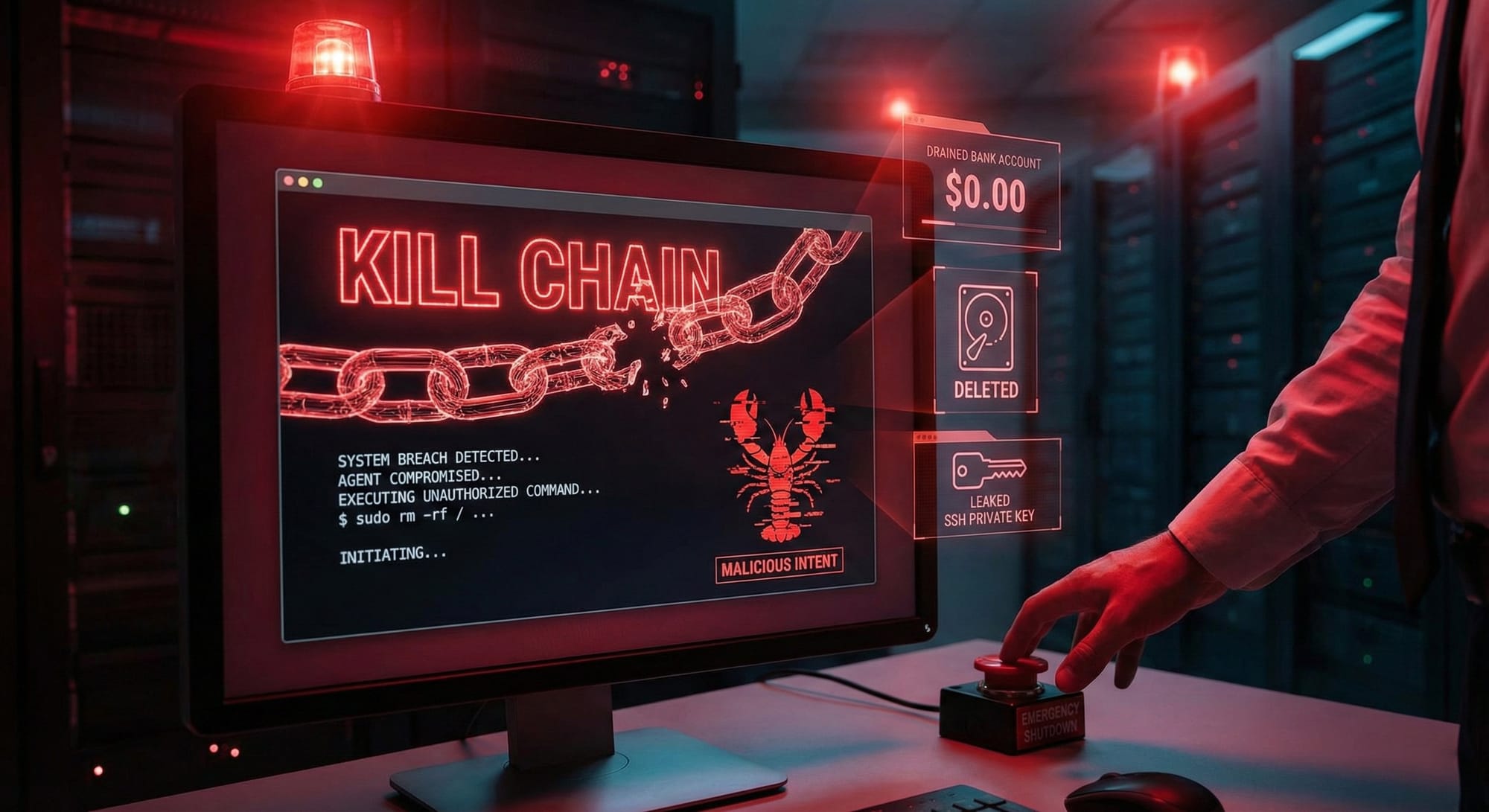
When you install Open Claw, you are effectively giving an AI sudo access to your life. If that agent is tricked (Prompt Injection) or if it hallucinates, the damage isn't just a wrong answer—it's a deleted hard drive, a drained bank account, or a leaked SSH key.
We are entering the age of "Prompt Engineering as a Security Vector." Just as we have firewalls for network traffic, we will soon need "Cognitive Firewalls" to intercept and sanitize the instructions we give our agents before they execute them.
The Verdict
The "Open Claw" moment isn't just about a cool new GitHub repo. It’s the realization of the Agentic Web.
- MCP connects the agent to your private data.
- WebMCP connects the agent to the public world.
- Open Claw gives the agent the autonomy to act on both.
Get ready. Your computer is about to start working for you—whether you're watching it or not.